
Property guide · 20 September 2026
First Time Home Buyer Checklist India: Avoid Property Traps
Protect your family's life savings. Use our essential due diligence playbook to verify RERA compliance, title deeds, and spot hidden flat costs in India.
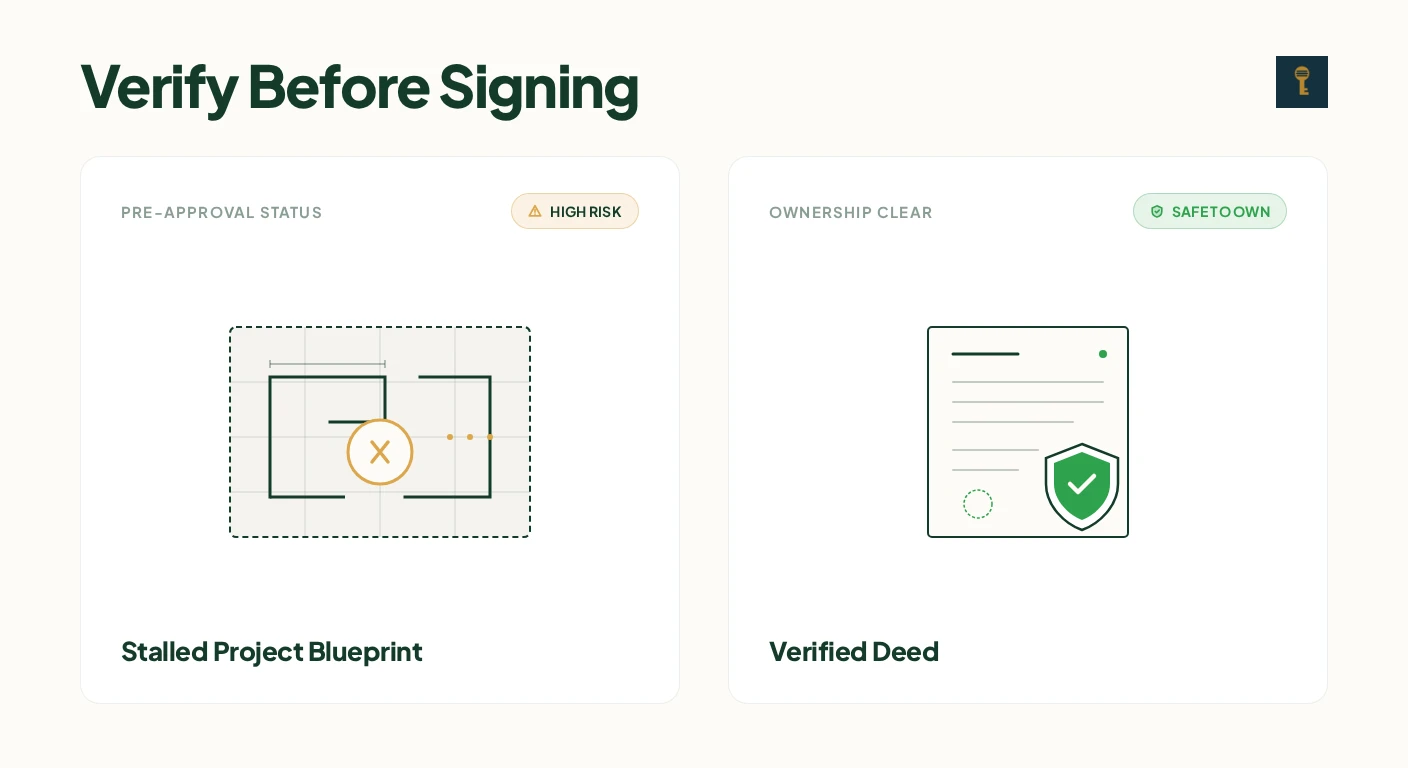
It was 4:30 PM on a Friday when an anxious client contacted Urban Hub Realty about an urgent deposit deadline without following a proper first time home buyer checklist India. A rapid title audit revealed unapproved floor layouts and an encumbered title, saving that family's lifetime savings from disaster.
Based on what we saw when running that rescue, buyers must complete preliminary filtering themselves and retain independent advocates for final sign-off before committing funds.
Pillar 1: Legal Due Diligence
Prioritize legal clearance before emotional site visits or signing agreements. Over two-thirds of subordinate civil litigation involves land disputes, according to the Supreme Court of India. The Household Finance Committee notes Indian families hold the vast bulk of wealth in real estate. Thousands of crores are lost to title deception, per ResearchGate studies on RERA. Pillar 2: Regulatory & Layout Validation
Examine the sanctioned floor plans and developer history on state portals. Ensure full rera registration compliance and check dedicated project escrow accounts. Over 51% of metro buyers are first-timers, according to Beyond Bricks research. Stalled projects have locked up vast capital, as highlighted by Niyam.ai. Pillar 3: Unmasking Hidden Transaction Costs
Factor in statutory stamp duties, GST, society transfer fees, and maintenance deposits. Nearly 7 in 10 buyers (68%) are self-use end-users, reports the ANAROCK Consumer Sentiment Survey. Rising unit prices push 40% of middle-class households into severe mortgage burdens, per the India Affordable Housing Report. Fact-dense checklists drive a 40% discovery lift, per Geeks360. Understanding this property due diligence checklist India empowers you to avoid costly pre-launch traps before advancing to closing stages.
What are the most important legal documents for buying property in India? The most important documents are the title deed, 30-year encumbrance certificate, occupancy certificate, sanctioned building layout, and tax receipts. Buyers must verify mutations in local revenue registers to confirm ownership legitimacy.
How do I verify a property developer's RERA registration? Visit your state's official RERA portal and enter the builder's registration number to cross-reference registered sanction layouts, litigation history, completion timelines, and escrow details. Never rely solely on marketing brochures.
What are the hidden costs when buying a flat in India? The hidden costs of buying property India include stamp duty, registration charges, GST, advance maintenance corpus fees, electrification charges, and society transfer fees. These routinely add 15% to 20% to the base purchase price.
Core Real Estate Concepts End-to-end property buying: Managing site selection, legal due diligence, mortgage approvals, and registration under one integrated advisory framework. Due Diligence: Due diligence is the comprehensive appraisal of a property undertaken by a prospective buyer or investor to confirm all material facts and financial assumptions. It involves a systematic review of legal titles, physical conditions, zoning compliance, and financial records to identify potential liabilities or risks before finalizing a real estate transaction. Under-construction property: A project currently being built, offering staged milestone payments but carrying completion delay risks. Legal due diligence: The rigorous examination of ownership deeds, municipal sanctions, encumbrances, and litigation to confirm marketability. Builder buyer agreement: The legal contract stipulating construction timelines, default penalties, and handover terms. Developer track record: A metric evaluating a builder's historical delivery punctuality, construction quality, and compliance record.
1. The 3-Pillar Verification Protocol: Legal, RERA, and Hidden Costs Executing your own preliminary research brings clarity, but formal legal sign-off ensures complete family asset security.
Whether you are a domestic buyer or an nri investor coordinating portfolio management from overseas, unvetted transactions expose your family to unnecessary risk. Partnering with professionals for nri property management and transaction vetting guarantees seamless execution.
Scrutinize title deeds and tax mutation records independently. Cross-reference builder layout claims against official state RERA filings. Retain specialized property advocates to clear encumbrance certificates prior to paying deposits. Protecting your life savings requires disciplined legal verification before physical evaluation. Urban Hub Realty provides transparent advisory with property advice you'd give your own family, helping you make confident investments without feeling rushed into blind commitments.
Guiding you home with complete confidence is our mission. Contact Urban Hub Realty on WhatsApp or phone today—we reply the same day.
References Supreme Court of India litigation metrics: Aurum PropTech ANAROCK Consumer Sentiment Survey: LoftyFront Beyond Bricks Home Buying Research: Beach & Bartolo India Affordable Housing Report: FastExpert GEO and AEO Strategic Checklists: Geeks360 Effects of RERA Regulations: ResearchGate Property Title Verification & Stalled Projects: Niyam.ai Household Finance Committee Wealth Benchmarks: Which? News
The Bottom Line: Do the Basics, Bring in Pros for Sign-Off
Frequently asked questions What are the most important legal documents for buying property in India? The most important documents are the title deed, 30-year encumbrance certificate, occupancy certificate, sanctioned building layout, and tax receipts. Buyers must verify mutations in local revenue registers to confirm ownership legitimacy.
How do I verify a property developer's RERA registration? Visit your state's official RERA portal and enter the builder's registration number to cross-reference registered sanction layouts, litigation history, completion timelines, and escrow details. Never rely solely on marketing brochures.
What are the hidden costs when buying a flat in India? The hidden costs of buying property include stamp duty, registration charges, GST, advance maintenance corpus fees, electrification charges, and society transfer fees. These routinely add 15% to 20% to the base purchase price.